Kitchen Chimney for Indian Cooking in Navi Mumbai: Size, Duct Route and Height Before You Buy
Choosing a kitchen chimney for Indian cooking in Navi Mumbai? Learn the right size, duct route and height. Book a free site visit with Sejal Interiors.
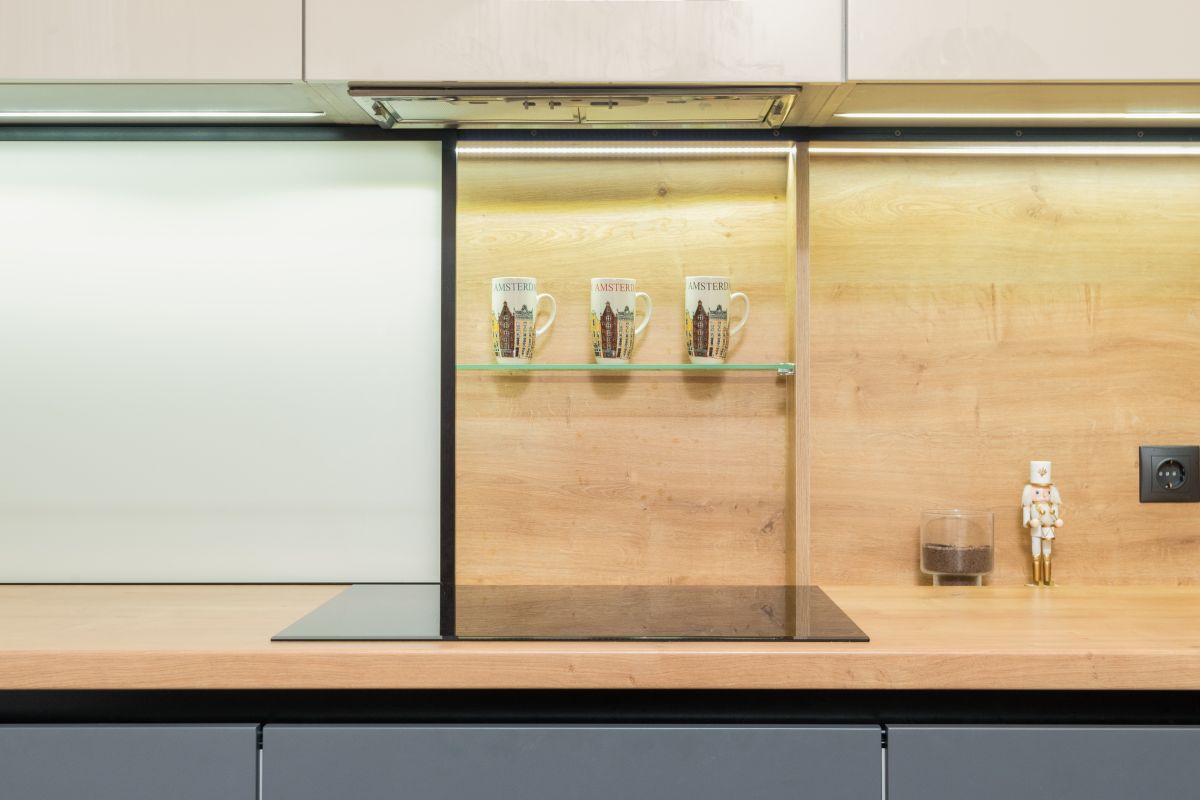
Photo: Pexels/Max Vakhtbovych
Most people pick a kitchen chimney by looking at the hood. The better question is where the smoke will go. Tadka, frying and a hot tawa put oil and smoke into the air every day, and a chimney only works if that air has a clear way out. At Sejal Modular Kitchen And Interiors in Sector 19, Kharghar, we plan the vent route first and choose the chimney second. Here is how that works in a Navi Mumbai flat.
Start with the wall, not the hood
Look at where your hob will sit and where the nearest outside wall is. That distance is your duct, and it decides almost everything else.
A chimney pulls air through a pipe, and every metre of pipe and every bend slows that air down. A hob on an outside wall can vent with a short, straight run. A hob in the middle of a kitchen, with the duct crawling along the ceiling to a far window, will always struggle, whatever the brand.
So before you shortlist a chimney, stand in the kitchen and ask three things:
- Which wall is outside, and does it face open air or a shaft?
- Can a hole be made in that wall, or is it a column or a beam?
- Will the hob sit close enough to that wall to keep the duct short?
If you are still at the handover stage, mark the duct position on the first visit. Our flat possession checklist explains why we mark the gas point, sink drain and chimney duct before any carpentry begins.
Ducted or ductless: what suits a flat
A ducted chimney sends smoke outside through a pipe. A ductless one filters the air through a charcoal filter and pushes it back into the kitchen.
For Indian cooking, ducted is the better choice wherever you can manage it. Our food puts out heavy smoke, oil mist and strong smells, and a filter that recirculates the same air has a hard job. Ductless makes sense only when you truly cannot reach an outside wall, for example in a kitchen with a shaft or a blocked wall on all sides. Even then, expect to clean or change the filter often.
The honest middle path: if the duct is long, it is often better to move the hob a little than to buy a bigger chimney. Moving the hob is a design decision made once, on paper. Fighting a long duct is a daily problem.
The duct route: shorter, straighter, wider
This is the part most buyers skip, and it matters more than the hood.
- Keep it short. The nearest outside wall is the best exit.
- Keep it straight. Each bend cuts airflow. Plan for as few as possible, and use gentle curves instead of sharp elbows.
- Keep it a decent width. A narrow pipe chokes a strong motor. Check your chimney's manual for the recommended duct diameter and match it.
- Slope it slightly outward. Oil that condenses inside the pipe should run towards the outlet, not back into the hood.
- Give it a proper outlet. The outside end needs a cap or flap that stops rain and birds, and does not blow smoke into a neighbour's window.
Cutting a clean hole through a wall is civil work. Our civil work team core-cuts the wall, makes it good and seals around the pipe, so the monsoon does not find its way in along the duct. If you let a chimney fitter punch a rough hole at the last minute, you may end up with cracks and a leaking wall.
Chimney size for a modular kitchen
Once the route is settled, the size is simple.
Width. The chimney should be at least as wide as the hob, and a little wider is better. A 60 cm hood over a 75 cm hob leaves the outer burners uncovered, and smoke escapes around the edge. Most modular kitchens use a 60 cm or 90 cm chimney. Match it to your hob, not to the wall space.
Suction. Suction is quoted in cubic metres per hour. A bigger or busier kitchen needs more than a small one, and a long duct needs more than a short one, because the duct eats some of the power. Ask the dealer for the figure at the duct length you actually have, not the one on the box. Do not buy the highest number just because it is the highest. A very strong motor on a thin duct is noisy and wastes power.
Height above the hob. Every chimney comes with a recommended mounting height in its manual. Follow it. A hood hung too high lets smoke drift past. Hung too low, it is a head-bump waiting to happen and a risk near open flame. Mark the height before the wall units go up, so the chimney and the cabinets line up.
Our modular kitchen team draws the hob, chimney and wall units on one plan, so the duct, the height and the cabinet depth are all settled together.
Filter type: baffle, mesh or filterless
The filter catches oil before it reaches the motor.
- Baffle filters are stainless steel plates that spin the air and trap oil. They suit heavy Indian cooking and are washable.
- Mesh filters are cheaper but clog quickly with oily smoke, and they need more frequent cleaning.
- Filterless designs use a different air path and promise less cleaning. They are worth a look, but ask for a demo and check what the maintenance really involves.
Whichever you choose, you will need to wash it. Oil that stays in the filter and motor is the main reason chimneys go quiet and weak after a year or two. Decide who in the house will do the cleaning, and how often, before you pick an auto-clean model. Auto-clean saves effort, but it is not a reason to skip a service visit.
When a chimney is not the answer
A chimney is not a magic fix for a kitchen without airflow. If the room has no window and no exhaust, the smoke has nowhere to go, and a chimney will pull the air out only if fresh air can come in. In a closed kitchen with a sealed door, open a window or add an inlet.
Likewise, if you cook very lightly, an exhaust fan and a window may be enough. Not every kitchen needs a heavy chimney. And if your kitchen opens straight into the living room, think about noise: a strong chimney at full speed is loud enough to talk over.
For safety near open flame, ask the installer to follow the manual and keep any wiring away from the hood and hob. For general fire safety guidance in Maharashtra, see the Maharashtra Fire Services site.
Questions to ask before you buy
- How long will my duct be, and how many bends does it have?
- What is the suction figure with that duct, not without it?
- How wide is the hob, and does the chimney cover it?
- What is the recommended mounting height?
- Who does the wall cutting, and who seals it?
- How is the filter cleaned, and how often?
If the dealer cannot answer the first two, speak to someone who has seen your kitchen.
Frequently asked questions
What size kitchen chimney is best for Indian cooking?
Match the width to your hob. A 60 cm chimney suits a 60 cm hob, and a 90 cm chimney suits a wider one. Then choose the suction for your duct length, not for the box.
Is a ducted or ductless chimney better for a Navi Mumbai flat?
Ducted is better for Indian cooking if you can reach an outside wall. Ductless works only where no outside wall is possible, and its filter needs frequent cleaning.
How high should a kitchen chimney be above the hob?
Follow the height in your chimney's manual. Mark it before the wall units are fixed so the chimney and cabinets line up.
How long can a chimney duct be?
Shorter is better. Every metre and every bend slows the air, so keep the run short and straight. If the duct has to be long, ask the dealer for the suction figure at that length.
Is an auto-clean chimney worth it?
It saves daily effort, but you still need to service it. Decide who will clean the filter and motor, and how often, before you choose the model.
Where can I get a chimney planned and installed in Kharghar?
Our modular kitchen and civil work teams in Sector 19, Kharghar, plan the duct route, cut the wall and fit the chimney as part of one kitchen job. Book a free site visit.
Planning a kitchen in Navi Mumbai?
Gulab Jangid opened Sejal in 2009 and still runs it from Shop No. 3, Devdarshan Complex, Kesar Symphony, Sector 19, Kharghar. On a free site visit our modular kitchen team measures your kitchen, marks the duct route and gives you a written quotation. If you are also choosing the slab, read our guide to the kitchen countertop, and for the cabinet boards see plywood, MDF or HDHMR. The sink is the other fixed point in a kitchen, so read how to choose a kitchen sink too. Send your flat's details through the contact page, and we'll fix a visit.