A Pooja Unit for a Small Flat in Navi Mumbai: Five Places It Fits, and How to Build It
Where does a pooja unit fit in a small Navi Mumbai flat? Five spots that work, plus lamp smoke, depth and shutters. Book a free site visit with Sejal Interiors.
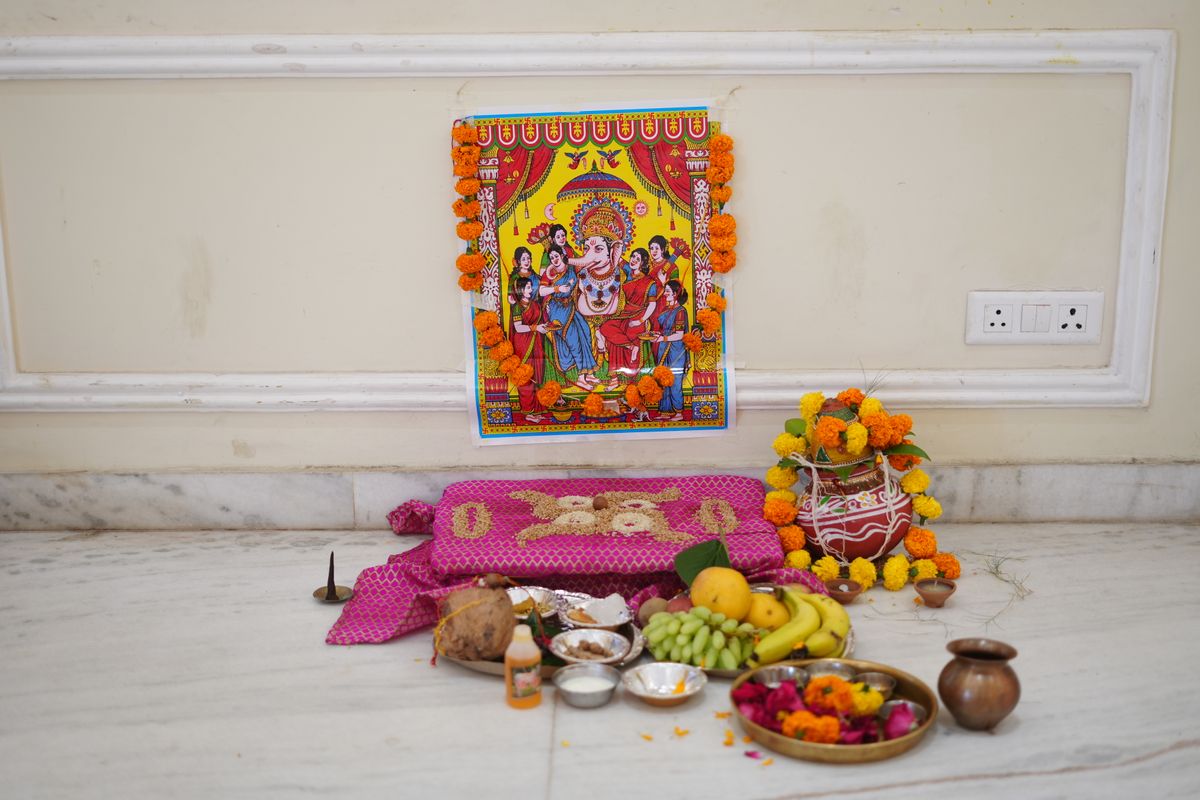
Photo: Pexels/Vijay Krishnawat
In a lot of new flats, the pooja starts on a side table or a builder's shelf. Within weeks, diya smoke marks the wall. A pooja unit for a small flat doesn't need a separate room. It needs the right wall and a few details settled before the carpenter starts. At Sejal Modular Kitchen And Interiors in Sector 19, Kharghar, these are the five places we look at first in a Navi Mumbai flat.
First, decide what the unit has to hold
Before you pick a wall, list what goes in it. The idols or photos, and the tallest one among them. The lamp or diya, and whether it burns every day. The thali, bell, kalash and incense. Books, a matchbox, spare wicks and oil.
That list decides the size. A family that lights a lamp twice a day and keeps a large framed photo needs a deeper, taller unit than one that keeps two small idols and lights an electric diya. Measure your thali and your tallest idol, because the shelf has to take both with room to spare.
Then ask one more question: will someone sit or stand in front of it? Standing pooja needs the shelf at about chest height. Sitting pooja needs it lower, with clear floor space in front.
Five places a pooja unit fits in a small flat
1. A living room wall
This is the most common spot in the flats we visit, and for good reason. It is the largest room, it usually has a free wall, and the whole family passes it every day.
A pooja unit in the living room works best on a wall of its own, away from the sofa's back and the TV. Keep a little floor space in front so nobody brushes past a lit lamp. If the room is shared with guests most evenings, a unit with shutters lets you close it when you want.
2. A foyer or entrance niche
Many flats have a short passage or a recess near the main door. A slim, wall mounted pooja unit can sit there without taking anything from the living room.
The catch is draught. An entrance gets air every time the door opens, which is hard on an open flame. If you choose this spot, plan for a closed unit or a lamp with a glass cover, and keep shoe racks on the other side of the passage.
3. A kitchen or dining wall
Some families prefer the pooja near the kitchen, and in compact flats the dining wall is often the only free surface. A pooja unit in the kitchen can work if it is well away from the stove and the sink, so oil splashes and water don't reach it.
We usually suggest a closed unit here, with shutters, because kitchen grease settles on everything over time. A dining wall outside the cooking zone is the cleaner option of the two.
4. Built into a wardrobe or bedroom unit
When there is really no free wall, a section of a bedroom wardrobe or study unit can be given to the pooja, with its own shutters. This needs careful planning. The section should have its own back and top, not share a shelf with clothes, and the lamp should be electric or kept outside the unit while it burns.
It is a practical answer for a one bedroom flat. It is not the right answer if you light a real diya every day.
5. A corner
A corner unit, triangular or a small L, uses space nobody else wants. It suits a single idol and a small lamp. Corners often hide a column or a pipe chase, so check the wall before you design around it.
Wall mounted pooja unit design: the details that matter
A wall mounted unit keeps the floor clear, which is why it suits most small flats. Whichever spot you choose, these points decide whether it still looks good after a few years.
- Depth. Deep enough for the thali and for the lamp to sit in front of the idol without the flame being close to the back panel. Measure your own items rather than copying a catalogue size.
- Heat and smoke. Daily diya smoke darkens the panel above it. A small metal or stone plate behind and above the lamp is easier to clean than laminate. Keep the flame well below any shelf above it.
- Shutters. Open units look lighter. Closed units stay cleaner, and you can shut them when the room is in use. Jaali or glass shutters give you something in between.
- Board. The base takes oil, water from the kalash and heat. Use a board that copes with damp, as we explained in our post on plywood, MDF and HDHMR.
- Light and socket. Decide the backlight or spotlight and its switch before the false ceiling and the wall finish go up. Running a wire later means cutting a finished wall.
- A drawer. A shallow drawer below the shelf keeps matchboxes, wicks and incense out of sight.
Keep any open flame away from curtains and loose wiring, and never leave a lamp burning in an empty flat. The Maharashtra Fire Services publishes fire safety guidance worth a read before the festive season.
A few walls to avoid
Avoid a wall shared with a toilet or bathroom, which many families prefer not to use and which is also where seepage shows up first. Avoid the wall right under an AC unit, where water can drip. And avoid a spot where the shelf sits directly under a window that is opened in the monsoon.
If the only wall you have shows damp patches, fix the cause first. Our civil work team can trace and repair the seepage before any carpentry goes up. Many families also follow Vastu and prefer a particular direction, often the north-east. We plan around whatever your family follows, and the points above still apply on any wall.
When you don't need a built-in unit
- You are renting. A freestanding pooja unit moves with you. A built-in one stays with the landlord.
- You plan to move in a year or two. Spend on the flat you will stay in.
- Your current shelf already works. If it is stable, away from curtains and easy to clean, you may only need a metal plate behind the lamp and a drawer below.
Frequently asked questions
Where should the pooja unit go in a small flat?
On a free wall in the living room, a foyer niche, a dining wall away from the stove, a wardrobe section or a corner. Pick the spot where a lamp is safe and the family can stand or sit in front of it.
Can a pooja unit be combined with the TV unit?
It can share the same wall, but keep it as a separate section with its own shutters and some space between them. Most families prefer the mandir not to sit directly beside the TV.
How deep should a pooja unit be?
Deep enough for your thali and for the lamp to sit in front of the idol, well clear of the back panel. Measure your own items before the carpenter draws the unit.
Is a pooja unit in the kitchen a good idea?
It can work in a compact flat if it is away from the stove and sink. Choose a closed unit with shutters, because cooking oil settles on open shelves.
How do I stop diya smoke from staining the wall?
Fix a metal or stone plate behind and above the lamp, keep the flame low and away from shelves, and wipe the plate weekly.
What pooja unit design suits Kharghar flats?
Most Kharghar flats have compact living rooms, so a wall mounted unit with shutters, a drawer below and a planned light point works well.
Planning a pooja unit in Navi Mumbai?
Gulab Jangid opened Sejal in 2009 and still runs it from Shop No. 3, Devdarshan Complex, Kesar Symphony, Sector 19, Kharghar. Our interior design team plans the mandir with the rest of the room, and our custom furniture team builds it to your wall. If you have just taken possession, start with our flat possession checklist. Send your flat's details through the contact page, and we'll fix a free site visit.