Single or Double Bowl? Choosing a Kitchen Sink for Indian Cooking in Navi Mumbai
Single or double bowl sink for Indian cooking in Navi Mumbai? Learn the right size, depth and cabinet width. Book a free site visit with Sejal Interiors.
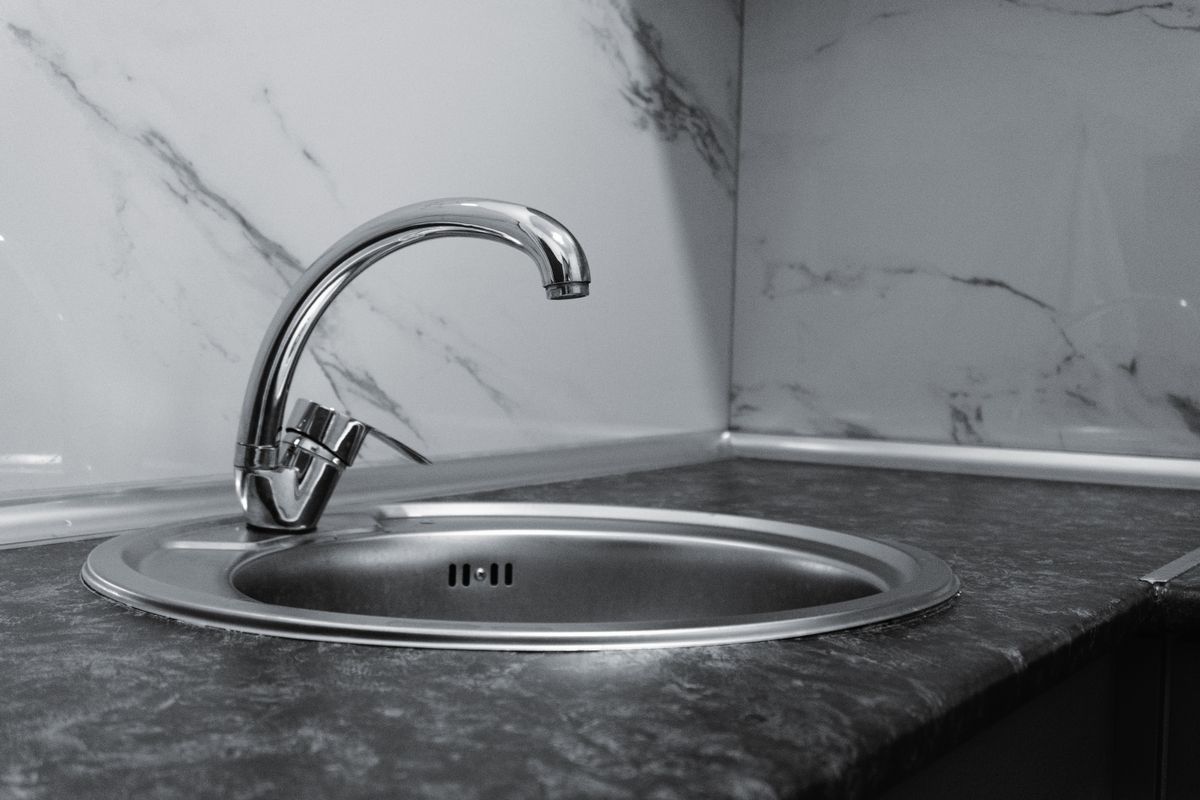
Photo: Pexels/Zulfugar Karimov
Before you look at a single sink catalogue, take your biggest kadhai and your largest pressure cooker and ask one question: will they fit in the sink and still let you run the tap? Indian cooking leaves behind heavy, wide, oily vessels, and a sink that looks lovely in a showroom can turn into a daily irritation. At Sejal Modular Kitchen And Interiors in Sector 19, Kharghar, we decide the sink before the cabinets, because the sink decides what goes underneath it. Here is how we think about it for a Navi Mumbai flat.
Try the biggest vessel first
Pick the three vessels you wash most awkwardly. For most homes that means the kadhai, the pressure cooker and the large tawa or the biggest thali. Do not go by the catalogue size. Hold each one over an empty bucket or a marked-out square on the kitchen platform and see if it lies flat.
If your widest vessel does not fit flat in one bowl, that bowl is too small, whatever the label says. This is why we usually lean towards one large bowl for everyday Indian cooking. Two small bowls look organised, but a kadhai that has to be washed at an angle splashes water over the platform and the floor.
Single bowl or double bowl
A single large bowl is the safer default. You can wash a big vessel in one go, soak it, and rinse it under the tap without playing Tetris. It also suits smaller platforms, where a double bowl would eat most of the length.
A double bowl makes sense when two people cook and clean together, or when one side is reserved for rinsing vegetables and the other for dirty vessels. It works best on a long platform. In a compact Kharghar flat kitchen, the second bowl is often too narrow to be useful and still takes up counter space you would rather keep for cutting.
A 1.5 bowl sink, one big bowl plus a small side bowl, is the middle path. It is worth it only if you will genuinely use the small bowl, for tea strainers, vegetables or a quick rinse. If you know you will not, take the single bowl and keep the platform.
A simple test: if you can describe in one sentence what the second bowl is for, buy it. If you cannot, skip it.
Size and depth: measure your own platform
Catalogues and websites quote different sizes for "standard" sinks, so we do not rely on a number. We measure three things on site.
- The platform length between the stove zone and the end of the counter. The sink needs breathing space on at least one side, or there is nowhere to rest a wet vessel.
- The cabinet width underneath. The sink fits inside the base cabinet, so the cabinet must be wide enough to hold the bowl and the frame around it.
- How deep you can comfortably reach. A deeper bowl swallows a pressure cooker nicely, but a very deep one makes you bend more. Stand at the platform and imagine washing for ten minutes.
If you are replacing a sink in a ready kitchen, the cutout in the slab is already fixed. Measure it before you order, because widening a cut in granite or quartz is risky and often not worth it. Our guide to the kitchen countertop explains why the slab edge around the sink needs to be strong and well supported.
The cabinet underneath matters more than the sink
This is the part most buyers miss. A sink is not a free-standing object. It sits in a base cabinet that has to carry its weight, hold water pipes and a drain, and survive years of damp air.
- Plan the pipes first. The water points and the drain should be marked on the wall before the cabinet is built. If the drain sits in the wrong place, the plumber ends up cutting through the shutter or the side panel.
- Choose a damp-tolerant board. The sink cabinet sees more water than any other part of the kitchen, especially in monsoon months. Our comparison of plywood, MDF and HDHMR explains which boards cope best in humid Navi Mumbai.
- Leave room for the trap. The curved pipe under the sink, the trap, needs space to be cleaned. A cabinet packed with fixed shelves leaves no room to reach it.
- Think about what lives under the sink. If you plan to store cleaning supplies, a water filter or a dustbin, tell us early so the pipes and the shelf can share the space.
Changes to drain lines, wall chases or slab levels are civil work, and they are far easier before the kitchen is installed than after.
Material, finish and what to ask the dealer
Most kitchens use a stainless steel sink, and it suits Indian cooking well: it takes hot vessels, it does not stain with turmeric and it is easy to wipe. Ask the dealer for three things in writing: the steel grade, the thickness, and whether the sink comes with a sound-dampening coating on the underside. A thin sink dents and rings loudly when water hits it. A thicker one is quieter and holds its shape.
Ask about the finish too. A brushed or matt finish hides scratches and water marks better than a mirror finish, which shows every mark from a steel scrubber. Also ask if the sink meets the relevant BIS standard, and check the Bureau of Indian Standards site if you want to read up on it.
A drainboard, the sloping ribbed area beside the bowl, is useful if you wash many vessels and do not have room for a separate rack. If the platform is short, a bowl with an attached drainboard can feel crowded. Placing a drying rack on the wall above is often the better answer.
Tap, position and the window
Two small decisions affect daily use more than people expect.
Tap height and reach. A tall swan-neck tap lets you wash a big vessel under it, but it splashes more into a shallow bowl. Match the tap to the depth of the sink, and make sure the spout reaches the centre of the bowl.
Where the sink sits. Ideally it is between the stove and the fridge, a classic working triangle, and near a window for light and drying air. In many flats the plumbing is fixed by the builder and you cannot move the sink far. If it is at one end of a short platform, plan the rest of the layout around it instead of fighting it.
When you do not need to think hard
If you are happy with your current sink, there is nothing to fix. If your kitchen is small, cooks one or two meals a day and your sink already fits your biggest vessel, a plain single bowl will serve you well for years. Spend your effort on the cabinet below it and the pipes behind it instead.
If you want a specific design that needs a special cutout, an undermount sink for example, discuss the slab and the base cabinet first. That kind of sink needs a particular slab edge and a firm base.
Frequently asked questions
Is a single bowl or double bowl sink better for an Indian kitchen?
A large single bowl is better for most Navi Mumbai flats because it fits big vessels flat and saves platform space. Choose a double bowl only if two people work at the sink or the platform is long.
Is a 1.5 bowl sink worth it?
It is worth it only if you will use the small bowl for rinsing vegetables, strainers or cups. If you will not, a single large bowl is the better use of space.
What size kitchen sink should I choose for a modular kitchen?
Pick the size by fitting your widest vessel, not by a catalogue number. Then check the platform length and the cabinet width underneath, and measure the cutout before you order.
Which stainless steel sink is good for a Kharghar kitchen?
Ask the dealer for the steel grade and thickness in writing, and prefer a thicker, sound-dampened sink with a brushed finish. It dents less, is quieter and hides scratches.
Can I change my kitchen sink without changing the platform?
Often yes, if the new sink fits the existing cutout. Measure the cutout first, because enlarging a cut in a granite or quartz slab is risky.
Do I need to move the drain to fit a bigger sink?
Not always. Sometimes the bowl fits where the old one was. If the drain or water points must move, plan that before the cabinets go in so no one cuts through finished panels.
Where can I get a kitchen sink planned and fitted in Kharghar?
Our modular kitchen and civil work teams in Sector 19, Kharghar, plan the sink, the cabinet and the pipes together as one job. Book a free site visit.
Planning a kitchen in Navi Mumbai?
Gulab Jangid opened Sejal in 2009 and still runs it from Shop No. 3, Devdarshan Complex, Kesar Symphony, Sector 19, Kharghar. On a free site visit our modular kitchen team measures your platform, marks the sink and drain position and gives you a written quotation. If you also want custom storage around the kitchen, see our furniture work, and for the chimney see our guide to the kitchen chimney. Send us your flat's details through the contact page, and we'll fix a visit.